Aramoho Bridge Shared Pathway Project
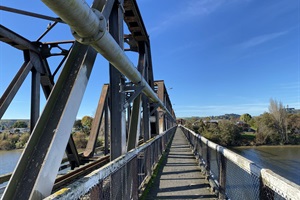
Used by thousands of pedestrians and cyclists each year, the Aramoho Bridge pathway is a key link between Aramoho, Whanganui East and the city centre. The existing clip-on structure was added to the railway bridge in 1961 and, while it continues to operate safely, it is reaching the end of its usable life.
Why the pathway needs replacing
The current pathway is narrow and no longer meets modern accessibility and safety expectations. While it remains open, ongoing inspections and maintenance are required to keep it operational. The council has been carrying out regular engineering inspections and maintenance work to extend the life of the structure while replacement funding is pursued. Inspection frequency has increased to fortnightly in recent years as the bridge continues to age.
A replacement shared pathway would:
- be in line with current standards
- improve accessibility
- increase safety standards
- support active transport connections
- improve resilience for an important community link.
Current status
Initially, this project was to be partly funded as a low-cost low risk project by the NZ Transport Agency Waka Kotahi (NZTA).
However, when this project was fully designed and tendered, construction costs came in higher than originally estimated. As a result, the project could not proceed under the original funding arrangements, and an alternative funding pathway is now being pursued with NZTA.
To be considered for funding through the National Land Transport Programme (NLTP), projects must be supported by a business case that demonstrates the need for investment and the benefits it will deliver.
The council has been working closely with NZTA to develop a business case for a replacement clip-on shared path. Supporting documentation and analysis have been submitted to NZTA and are currently being assessed.
Securing funding through the NLTP would provide significant financial support for the project, with up to 62 percent of the project cost potentially funded through NZTA.
This would substantially reduce the cost to local ratepayers and make the project more affordable for the community.
We are unable to provide timeframes at this stage. The outcome of this process, along with future NLTP funding decisions, will help determine the next steps and potential timing for the project.
What is happening with the Aramoho Bridge pathway?
The existing pathway remains open and safe to use, but it is nearing the end of its usable life. The council is planning for its future replacement whilst keeping the current pathway clip-on open.
Why does the clip-on pathway need replacing?
The current structure, built in 1961, is reaching it end of life and extensive maintenance is needed. Further, it is narrow and no longer meets modern accessibility standards.
Who uses the pathway?
The clip-on bridge pathway is used by thousands of people each year, including pedestrians, cyclists and school students. It is an important link between Aramoho, Whanganui East and the city centre.
Is the pathway safe to use?
Yes. The pathway continues to operate safely. The council carries out regular inspections to ensure it remains safe for public use.
How do I report a maintenance issue on the pathway?
As with any council asset you can report faults directly through our Customer Service Team or via the Antenno App. Once a report is logged, it is triaged for inspection which we carry out regularly.
Why hasn’t the pathway been replaced yet?
The council completed the design work for a replacement clip-on shared path, but construction costs came in higher than originally estimated. As a result, the project could not proceed under the original funding arrangements.
The council is now working with NZ Transport Agency Waka Kotahi (NZTA) to pursue funding through the National Land Transport Programme (NLTP). This funding pathway could cover up to 62 percent of the project cost, significantly reducing the cost to local ratepayers.
The council has submitted the required information to NZTA and is continuing to work through the assessment process. The outcome of this work will help determine the next steps and timing for the project.
How much will the replacement cost?
The current estimated cost to replace the clip-on is approximately $3.5 million.
When will construction start?
Construction cannot begin until funding is confirmed.
What improvements will a new pathway provide?
A replacement clip-on would be built as a shared path that is:
- Wider and safer
- Accessible for wheelchairs and mobility scooters
- Improve walking and cycling connections across the city
- Provide a more resilient long-term link across the river