Time to make a splash as Horizons dives into swim spot monitoring
Published on 03 November 2025
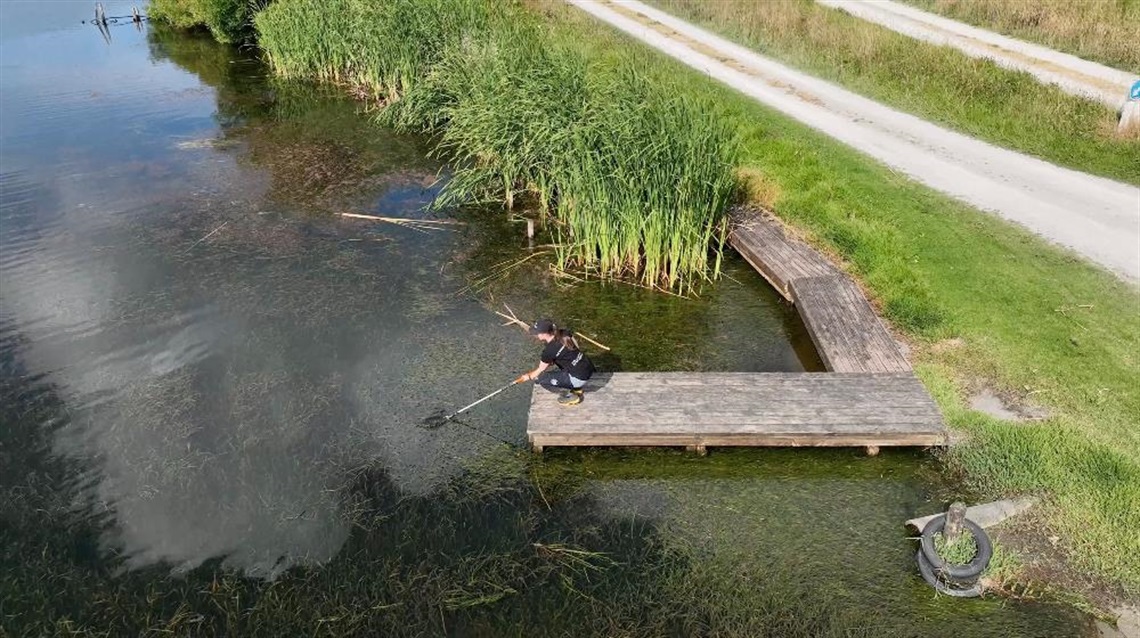
Image: Taking a swim spot sample at Lake Wiritoa
Horizons Regional Council media release
Horizons Regional Council is getting the region ready for warm summer days by rolling out its contact recreation water quality testing programme.
Horizons environmental monitoring scientist Ian Hurst says the programme, commonly known as the ‘swim spot monitoring programme’, will see staff monitoring more than 80 sites across the region from 3 November 2025 to 3 April 2026.
“We test for E.coli at freshwater sites and enterococci at coastal sites to measure faecal contamination,” says Mr Hurst.
“Finding these bacteria in waterways suggests other pathogens, which are harmful to human health, may also be present.
“As E.coli and enterococci are not visible to the human eye, taking samples and sending them to an independent lab for processing is a key way we can help people make informed choices about where to swim this summer.”
Samples are taken once a week before being analysed at an independent lab, with results uploaded to the LAWA website," says Mr Hurst
“Horizons does not close swim spots, such as swimming holes or beaches, when a result indicates an area is unsuitable for swimming – the decision to swim always remains with individuals. However, test results can help to inform people about where and when to swim."
“If people use LAWA and find their usual spot is unsuitable for swimming, they’ll also be able to see what spots are suitable for swimming. While not being able to go to a usual spot is not ideal, it does give the opportunity to explore other swim spots across the region.”
It is also important people keep an eye out for cyanobacteria, says Mr Hurst.
“Cyanobacteria, which appears as black mats on rocks in rivers and as green scum in and above water in lakes, can be toxic to animals and people.
“While people may suffer conditions such as gastroenteritis, respiratory illness, and ear and skin infections from coming into contact with water with elevated levels of cyanobacteria, animals are especially prone.
“Cyanobacteria gives off a musty smell which dogs seem to love, but ingesting cyanobacteria has the potential to be seriously harmful to dogs.
“Be sure to keep an eye on your pets around waterways, especially if cyanobacteria is present in the area.”
People should also consider other safety matters, especially around rivers, before getting in the water, says Mr Hurst.
“Please stay out of water if it has rained heavily within the last 72 hours, as this can create faster-flowing water and contribute to higher levels of faecal contamination.
“It is important to check any swim spot before swimming. This is especially true after heavy rain, as things may have changed beneath the surface since you were last there. Be sure to check for large objects in areas where you may be swimming – this is very important if you are planning to dive, do bombs or pop a manu.
“Rivers and beaches across Aotearoa New Zealand can be unpredictable and their power easy to underestimate. Do not enter the water alone, actively supervise children, and stay out if you are not a confident swimmer.
“Also avoid swimming close to cliff faces in case of slips, which can occur anytime. Finally, call 111 during any emergency at a waterway.
“It is important we all remember and follow safety advice. More information about how to stay safe in and around rivers and beaches can be found at www.watersafetynz.org.”