Looking towards priority product recycling
Published on 10 March 2021
Whanganui District Council’s waste advisor, Stuart Hylton, says the Whanganui Resource Recovery Centre has already begun to collect some of the ‘priority products’ the government has earmarked for a new product stewardship scheme and will be ready to collect others once the scheme is rolled out.
The scheme focuses on the most hazardous products and requires manufacturers, importers and retailers to take responsibility for their products by working with central government to set up recycling and reuse schemes.
Stuart Hylton says he envisages that the Whanganui Resource Recovery Centre will become a drop-off hub for priority products once the scheme is up and running.
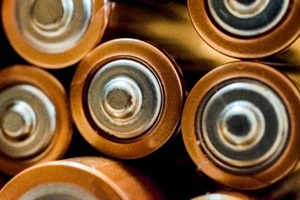
The centre currently collects domestic batteries, eco-bulbs and fluorescent tubes, which are included under the e-waste priority product category.
The other priority product categories are plastic packaging, tyres, agrichemicals, refrigerants and farm plastics.
“We want to encourage people to bring energy efficient light bulbs and fluorescent tubes to the centre, as well as all domestic batteries – both alkaline and rechargeable – and car batteries,” Stuart Hylton says.
The resource recovery centre sends energy efficient light bulbs and fluorescent tubes, which contain mercury, to waste specialists in Auckland and these are fully recycled with zero waste going to landfill.
Stuart Hylton says all domestic batteries should be dropped at the resource recovery centre to be disposed of safely.
“We recommend purchasing rechargeable batteries, because as well as being reusable, they can also be sent off to be fully recycled at the end of their life.
“Even though standard alkaline batteries can’t be recycled, it’s important to bring them into the centre because they need to be encased in cement before being sent to landfill to prevent leaching into the environment,” Stuart Hylton says.
He says other little-known products which can be taken to the centre include children’s car seats, old toothbrushes and toothpaste tubes.
“Whanganui District Council subsidises the recycling of children’s car seats, so it’s just $5 to drop off a car seat, instead of the $25 that is paid in some regions.”
Car seats are processed by SeatSmart, which supports social enterprise organisations to dismantle some of the seats. Most of the metal and plastic is recycled and the straps are used to make bags.
If you’re stuck on how to dispose of an item, check out the ReSource Whanganui website’s A-Z directory which has up-to-the-minute information on recycling and reusing in Whanganui: https://resourcewhanganui.org.nz/